
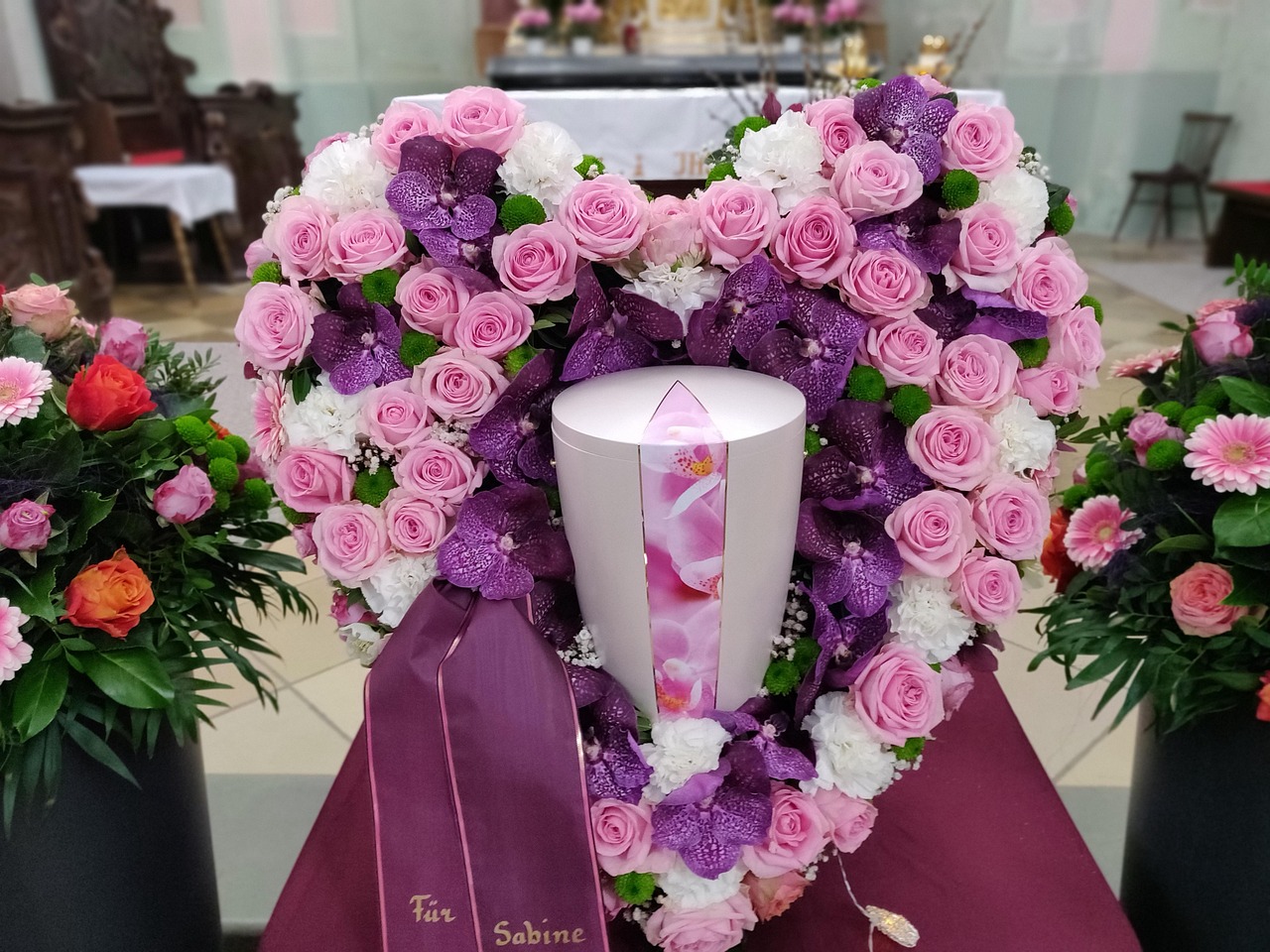
A mini urn, also called a keepsake urn, is a small memorial vessel designed to hold a token portion of ashes rather than the full amount. Typical capacity is 3 to 50 cubic inches (roughly 0.05 to 0.8 litres), compared with about 200 cubic inches (3.3 litres) for a full-size adult urn. They are most often chosen when ashes are shared between several family members, or when one person wishes to keep a small, private memorial at home.
When a family decides that ashes should not rest in one place alone, the practical question follows quickly: what do the smaller portions go into? Mini urns and keepsake urns exist for exactly this purpose. They are not simply scaled-down versions of a standard urn – they are a distinct category with their own materials, sealing methods, capacities and conventions. This guide explains what they hold, how they differ from one another, how to choose between the available forms, and what to consider before dividing ashes in the first place.
What a mini urn or keepsake urn actually is
The terms „mini urn” and „keepsake urn” are used interchangeably across most of the UK memorial trade. Both describe a sealed vessel intended to hold a small, symbolic quantity of cremated remains. The defining characteristic is not the shape or the material but the intent: a keepsake urn is never expected to hold a complete set of ashes.
This distinguishes it from every other urn category. A full-size urn is sized to the person; a keepsake urn is sized to the gesture. Families frequently order several matching keepsakes at once so that each sibling, child or grandparent receives an identical vessel, with the remainder of the ashes interred, scattered or kept in a main urn.
Capacity: how much a keepsake urn holds
Urn capacity in the UK is quoted either in litres or in cubic inches, and the cubic-inch convention is inherited from the international urn trade. The working rule for a full-size urn is one cubic inch of capacity per pound of the person’s healthy body weight. Keepsake urns abandon that rule entirely, because they are not sized to a body.
| Type | Typical capacity | Approximate portion of ashes |
|---|---|---|
| Pendant or jewellery vessel | Under 1 cubic inch | A pinch – a few grams |
| Very small keepsake | 3 to 10 cubic inches | A teaspoon to a tablespoon |
| Standard keepsake urn | 10 to 30 cubic inches | Roughly 5 to 15 per cent of an adult’s ashes |
| Large keepsake / small urn | 30 to 50 cubic inches | Up to a quarter of an adult’s ashes |
| Full-size adult urn | Approximately 200 cubic inches | The complete amount |
Did you know? An average adult cremation produces between 1.5 kg and 3.5 kg of ashes, occupying roughly 3 litres. A typical keepsake urn therefore holds only a small fraction of that volume, which is why families ordering several keepsakes rarely need to worry about running short.
Where the terminology varies
A few related terms appear in UK catalogues and are worth separating:
- Mini urn – the most common general term for a small urn holding a portion of ashes.
- Keepsake urn – the same object, with the emphasis on personal retention rather than interment.
- Sharing urn – a keepsake sold in matching sets, intended for division between family members.
- Token urn – an older term, now less used, meaning the same thing.
- Companion urn – the opposite: a larger urn designed to hold the ashes of two people together.
- Ashes jewellery – a wearable vessel, technically a keepsake but usually treated as a separate category.
Key takeaway: A keepsake urn is defined by purpose, not by design. If it is intended to hold a portion rather than the whole, it is a keepsake urn regardless of what it is made from or how it is shaped.
Why families choose mini urns and keepsake urns
The decision to use keepsake urns almost always follows a decision about what happens to the ashes as a whole. Understanding the common situations helps clarify which form and capacity will suit.
Sharing ashes between family members
This is by far the most frequent reason. Where a person is survived by several children, or by family living in different parts of the country – or in different countries – a single urn in one household can feel like an unequal arrangement. Matching keepsake urns allow each person to hold something without any one household becoming the sole custodian.
Families in this position usually order a set of identical vessels, sometimes with a larger main urn for interment or for the family home. Consistency matters here: identical urns avoid any suggestion that one person received more than another.
Keeping a portion after scattering or interment
Where the main body of ashes is scattered at a meaningful place or interred in a grave or memorial garden, that act is final. Many families find they want something retained before the scattering takes place. A single keepsake urn, filled beforehand, preserves that option without altering the wider plan.
This is a decision that cannot be reversed after the event, which is why keepsakes are often ordered at the same time as the main urn rather than later.
Travel, downsizing and practical constraints
A full-size urn is heavy and, in many designs, conspicuous. A keepsake is discreet, easily moved between homes, and simpler to carry when travelling. For someone living in rented accommodation, moving frequently, or sharing a home where a large memorial would be difficult, a small urn is often the more workable choice.
A private, personal memorial
Some people simply want something small and close at hand. A keepsake urn on a bedside table or in a drawer serves a different emotional function from a display urn on a mantelpiece. It is quiet, personal, and does not require explanation to visitors.
Good to know: There is no law in the UK preventing the division of ashes between family members. Ashes are not treated as property in the conventional sense, but crematoria release them to the applicant, and disputes are best resolved before the division rather than after.
Materials used for keepsake urns
Because keepsake urns are small, they are made from materials that would be impractical or costly at full size. This makes the keepsake category unusually varied.
Metal keepsake urns
Brass, stainless steel, pewter and aluminium dominate the keepsake market. Metal holds a threaded seal reliably, resists knocks, and takes engraving well. A threaded screw closure is the most secure sealing method available in a small vessel, which matters when an urn may be handled, moved or carried.
Metal keepsakes are also the most commonly produced in matched sets, since casting and finishing produce consistent results across multiple pieces.
Ceramic and porcelain keepsake urns
Glazed ceramic gives colour, texture and a hand-finished character that metal cannot. Ceramic keepsakes are typically sealed with a stopper or an adhesive seal rather than a thread, so they suit a fixed position at home rather than frequent handling.
Wooden keepsake urns
Small turned or carved wood vessels – oak, walnut, mango wood, beech – offer warmth and a domestic appearance. Wood accepts engraving and inlay, and a wooden keepsake often reads more as an ornament than as a memorial, which some families prefer.
Glass and crystal keepsake urns
Hand-blown glass keepsakes sometimes incorporate a small quantity of ashes into the glass itself during making, producing a permanent memorial object rather than a container. Others are hollow vessels sealed after filling. Both forms are decorative first and functional second.
Stone keepsake urns
Marble, granite and cultured stone give substantial weight in a small object, which many people find reassuring in a memorial. Stone is also the most suitable keepsake material if the vessel may eventually be placed outdoors or interred.
| Material | Usual seal | Best suited to |
|---|---|---|
| Metal | Threaded screw closure | Handling, travel, matched sets |
| Ceramic | Stopper or adhesive seal | Fixed display at home |
| Wood | Base plate or threaded insert | A domestic, ornamental appearance |
| Glass | Sealed during manufacture | Decorative, permanent memorials |
| Stone | Adhesive seal or fitted lid | Weight, durability, possible interment |
The wider comparison of these materials at full-size scale is covered in our guide to urn materials compared, and much of the same logic applies at keepsake scale. If you are choosing between finishes for a set, the keepsake urns range shows the practical differences more clearly than description alone.
Forms and shapes available
Keepsake urns are not restricted to the classic vase silhouette. The small format opens up designs that would be impractical at full capacity.
- Miniature vase – a scaled version of a traditional urn, usually part of a matching set with a full-size piece.
- Heart – the most popular keepsake form in the UK, often in metal or stone, frequently engraved.
- Cylinder or tube – compact and unobtrusive, sometimes designed to sit alongside a photograph frame.
- Sphere and teardrop – abstract forms that read as sculpture rather than as a memorial.
- Photo keepsake – a small urn with an integrated frame or printed image panel.
- Angel, bird and nature forms – figurative designs, often chosen where a symbol had personal meaning.
- Candle holders and lanterns – a concealed chamber within a functional object.
Did you know? Some keepsake designs conceal the chamber entirely, appearing to be an ornament, a paperweight or a small sculpture. These are chosen by people who want a memorial present in a shared living space without it being visible as such to guests.
How to fill and seal a keepsake urn
Dividing and transferring ashes is straightforward but should be approached calmly and without haste. Many families ask a funeral director to carry out the division, and most will do so at no significant additional cost. If you prefer to do it yourself, the process is as follows.
- Choose a clear, flat surface in a quiet room and cover it with a sheet of paper or a clean cloth.
- Have everything ready before opening anything: the keepsake urns, their fittings, a small funnel or a spoon, and a dry cloth.
- Open the transfer container or main urn. Ashes are usually supplied in a sealed plastic bag inside the crematorium container.
- Transfer a portion into each keepsake using the funnel or spoon. Work slowly; ashes are fine and can disperse.
- Wipe the rim and thread of each urn clean before closing, so the seal seats properly.
- Close the urn. Where a threaded closure is fitted, tighten by hand only.
- If a permanent seal is wanted, apply a small amount of clear silicone sealant or an adhesive supplied with the urn to the thread or rim.
Key takeaway: Fill keepsake urns before the main portion is scattered or interred, not afterwards. Once ashes have been scattered they cannot be recovered, and a keepsake filled at the last moment is often filled in circumstances that make the task harder than it needs to be.
Should the seal be permanent?
Opinion divides here. A permanently sealed urn cannot spill and needs no further thought – but nor can it be opened if the family later decides to scatter, inter or combine the contents. A hand-tightened threaded closure is secure enough for a vessel that stays in one place, and leaves options open.
A permanent seal is worth applying where the keepsake will travel regularly, be carried on a person, or be handled by children.
Keepsake urns compared with ashes jewellery
Both hold a portion of ashes, and both are chosen for the same underlying reason. The difference is how the memorial is carried through daily life.
| Keepsake urn | Ashes jewellery | |
|---|---|---|
| Capacity | 3 to 50 cubic inches | Under 1 cubic inch |
| Where it lives | A shelf, cabinet or drawer | Worn on the body |
| Risk of loss | Very low | Higher – clasps and chains fail |
| Visibility | Present in the home | Private unless mentioned |
| Suitable for children | Yes, with a sealed closure | Generally not, until older |
Many families choose both: a keepsake urn at home for the household, and a pendant for the person who wants the memorial with them. The two are not alternatives so much as different distances.
Choosing a keepsake urn: practical guidance
Match the set, not the taste
Where several keepsakes are being ordered for different relatives, resist the temptation to select a different design for each person. Identical vessels are the fairest arrangement and avoid awkwardness later.
Consider engraving before ordering
Most keepsake urns can be engraved with a name, dates, or a short line of text. Engraving is generally carried out before the urn is filled and sealed, so decide on wording at the point of ordering rather than afterwards.
Think about where it will sit
A keepsake urn intended for a bedside table has different requirements from one placed on an open shelf in a family room. Consider light, stability, and whether the object needs to read as a memorial or as an ornament.
Check the closure before you commit
The sealing method is the single most practical variable in a keepsake urn. A threaded metal closure is the most secure; a friction-fit stopper is the least. If the urn will be moved or handled at all, prioritise the seal over the finish.
Key takeaway: Order keepsakes at the same time as the main urn, in matching sets, with the engraving decided in advance. Almost every difficulty families report with keepsake urns comes from ordering them separately and after the fact.
Caring for a keepsake urn
Small urns require very little maintenance, but a few points are worth observing.
- Dust with a dry, soft cloth. Avoid household cleaning sprays, particularly on metal finishes and engraved surfaces.
- Keep wooden and ceramic keepsakes away from radiators, direct sunlight and damp.
- Check threaded closures occasionally; handling can loosen them over time.
- Handle brass and pewter with clean, dry hands, as fingerprints can mark polished surfaces.
- Store rather than display if the urn is not wanted in a living space – a drawer or cabinet is a perfectly dignified home.
Frequently asked questions
How much ash goes into a keepsake urn?
A typical keepsake urn of 10 to 30 cubic inches holds roughly a tablespoon to a small handful, or around 5 to 15 per cent of an average adult’s ashes. Several keepsakes can be filled from one cremation without exhausting the supply.
Is it legal to divide ashes in the UK?
Yes. There is no legal restriction on dividing cremated remains between family members in England, Wales, Scotland or Northern Ireland. The practical consideration is agreement between the family, as the crematorium releases the ashes to a single applicant.
Can a funeral director divide the ashes for me?
Most will, and many do so as a matter of course when told that keepsakes have been ordered. If you would prefer not to handle ashes yourself, ask at the point of arranging the cremation.
Do keepsake urns need to be sealed permanently?
No. A hand-tightened threaded closure is sufficient for an urn that stays in one place. A permanent adhesive seal is worth applying only if the urn will be carried, travelled with, or handled frequently.
Can a keepsake urn be buried or placed in a memorial garden?
Yes, provided the material suits the setting. Stone and metal keepsakes withstand burial and outdoor placement; wood and ceramic are better kept indoors. Check with the cemetery or memorial garden, as many have their own rules on what may be interred.
What is the difference between a keepsake urn and a companion urn?
They serve opposite purposes. A keepsake urn holds a portion of one person’s ashes; a companion urn is a larger vessel designed to hold the ashes of two people together, usually a married couple.
Can keepsake urns be taken on a plane?
Generally yes, in hand luggage, but the urn must be scannable – which in practice means avoiding dense metals such as lead or thick stone. Carry the crematorium certificate and check the airline’s policy before travelling.
How many keepsake urns can be filled from one cremation?
An average adult cremation produces enough ashes to fill a dozen or more standard keepsakes while still leaving a substantial main portion. In practice, family size rather than volume is the limiting factor.
Good to know: If the family is undecided about dividing ashes at all, a single keepsake filled at the outset costs nothing in terms of options. It preserves the possibility of sharing later without committing anyone to a decision during the days immediately after a funeral.