
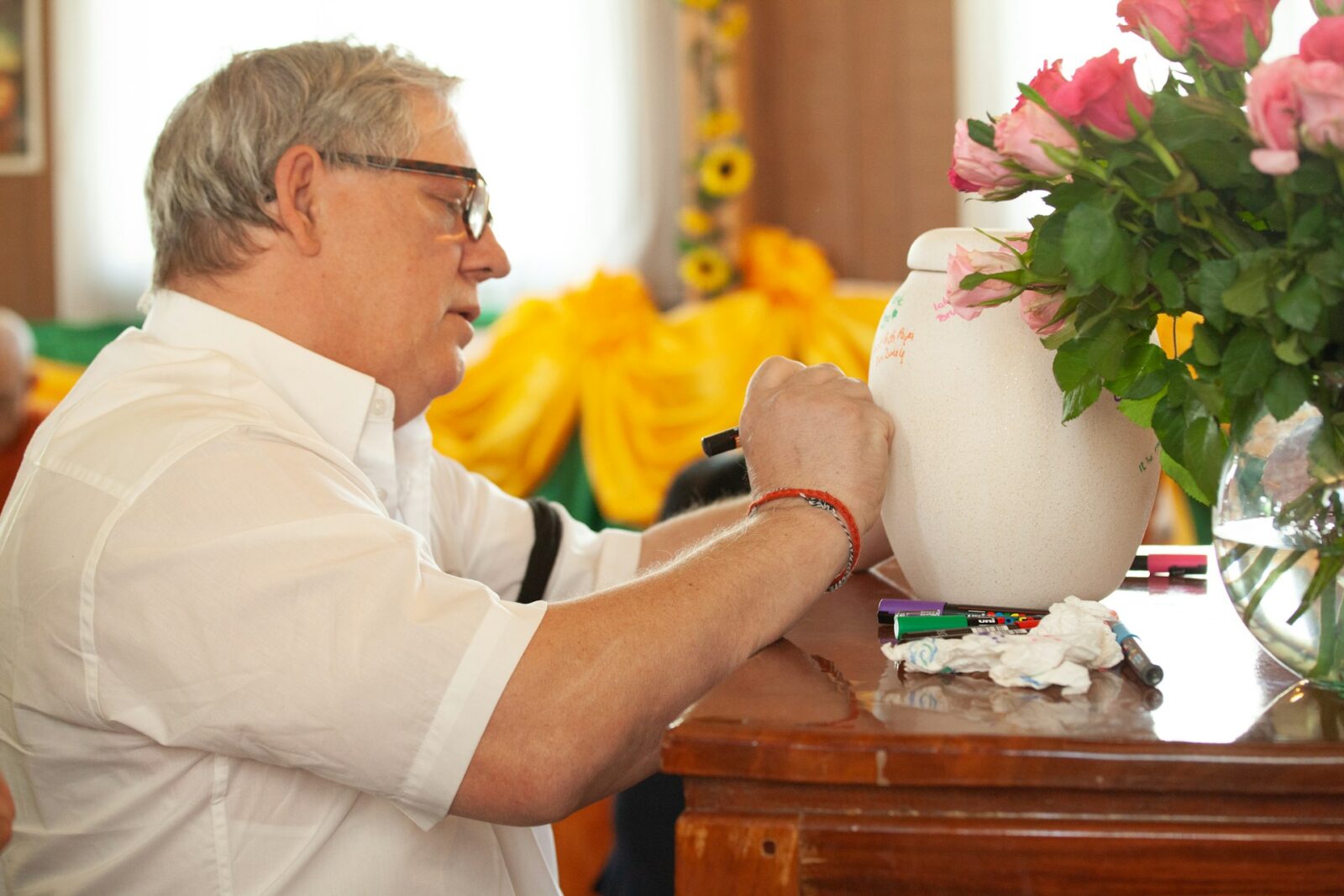
Interment of ashes is the act of placing cremated remains into a permanent resting place, such as a churchyard plot, cemetery grave, columbarium niche or family grave. In the UK, interment usually involves a small, dignified service led by a minister or celebrant, and the ashes are placed in a biodegradable or interment-suitable urn within a marked plot. It gives families a fixed, lasting place to visit and remember their loved one.
For many families in the United Kingdom, deciding what to do with a loved one’s ashes is one of the most personal choices to follow a cremation. Some choose to scatter them in a meaningful landscape, others keep them at home in a memorial urn, and a great many choose interment – a quiet but enduring tradition that gives the ashes a permanent place in the ground or within a memorial wall.
This guide explains exactly what interment of ashes means in British practice, where it can take place, what permissions are required and how the process typically unfolds. Whether you are planning ahead or arranging the interment in the weeks after a funeral, the information below sets out the practical and legal framework, the customs that surround the rite, and the considerations that help families choose the right setting.
What does interment mean?
The word interment comes from the Latin in terra, meaning „into the earth”. In modern English usage it describes the placing of human remains – whether a coffin or an urn of ashes – into a grave, vault, tomb or other consecrated or designated resting place. When referring specifically to cremated remains, the phrase used is interment of ashes.
In the UK, the term is used in three closely related ways:
- The physical act of placing an urn into the ground or into a niche.
- The short ceremony that accompanies it, often called the interment service.
- The legal and administrative process of registering ashes in a burial plot.
Interment, burial and entombment – the difference
The three words overlap but are not identical. The table below clarifies how each is used in British practice.
| Term | What it refers to | Typical use |
|---|---|---|
| Burial | Placing a body, coffin or ashes beneath the ground | The broadest term; used for coffins and ashes alike |
| Interment | The formal placing of remains into a designated resting place | Most often used for the ceremony that accompanies the placement of ashes |
| Entombment | Placing remains above ground, in a tomb, vault or mausoleum | Rare in the UK; more common in continental Europe and the United States |
Good to know: Many families use „burial of ashes” and „interment of ashes” interchangeably. Funeral directors and churchyard authorities, however, tend to reserve interment for the formal service and paperwork, and burial for the physical placement.
Why ashes are interred rather than simply buried
An urn of ashes is far smaller than a coffin, so the process is gentler, briefer and more flexible. Interment plots for ashes can be added to an existing family grave, placed in a dedicated section of a churchyard, or set within a small memorial garden. The hole prepared is shallow and modest in size, and the service that accompanies it is usually short – often no more than fifteen to twenty minutes – making it accessible to families who could not face a second full funeral.
Where ashes can be interred in the UK
Britain offers a wide range of permanent resting places for cremated remains. Each carries its own permissions, customs and atmosphere, and the right choice often depends on the family’s faith, the deceased’s wishes, and the kind of place loved ones will want to visit in years to come.
Churchyards and consecrated ground
For Christian families, a churchyard interment remains one of the most traditional and meaningful options. Many Church of England parishes set aside a dedicated area for the interment of ashes, sometimes called a garden of remembrance or memorial garden. Burial in consecrated ground generally requires the deceased to have a connection to the parish, although clergy have discretion in many cases.
Where a permanent marker is desired, a faculty may be needed – a formal permission granted by the diocese to authorise a memorial stone, plaque or kerb in the churchyard. The minister of the parish will advise on the local rules, which can vary on matters such as headstone size, materials and inscriptions.
Cemetery plots and lawn graves
Local authority and private cemeteries throughout the UK offer dedicated ashes plots. These typically include:
- Lawn graves – small turfed plots with a flat or modest upright memorial.
- Cremation plots – compact plots specifically sized for one or more urns.
- Family graves – existing burial plots into which ashes can be added alongside earlier interments.
Cemetery offices issue a deed of grant or exclusive right of burial, which sets out the length of time the plot is reserved and the rules governing memorials. These rights are usually granted for a set number of years and can often be renewed.
Columbaria and niche walls
A columbarium is a structure of small individual niches designed to hold urns. The niche is sealed after the interment, and a memorial plaque is fitted to its outer face. Columbaria are found at many crematoria and in some churches and cemeteries across the UK. They suit families who want a permanent above-ground memorial without the cost or upkeep of a traditional grave.
Woodland and natural burial sites
Natural burial grounds – sometimes called woodland burial sites or green cemeteries – have grown steadily in popularity. Ashes interred here are usually placed in a biodegradable urn, with a simple wooden marker, a tree or a wildflower meadow in place of a traditional headstone. The aim is for the ground to return naturally to woodland or grassland over time.
Key takeaway: Natural burial sites have their own rules, especially on memorials. Many do not permit stone markers, polished surfaces or non-biodegradable urns. Always confirm the site’s policy before purchasing the urn.
Private land and gardens
It is legal in England and Wales to inter ashes on private land, including a garden, provided the landowner gives permission. There is no formal licence required, but families considering this should think carefully about future ownership of the property – once a home is sold, the family loses easy access to the place of interment. For this reason, many people choose a churchyard, cemetery or natural burial site for the long term, even when a garden interment is permitted.
Burying ashes on private land has its own practical considerations, which are covered in our dedicated guide to burying ashes in your garden.
How interment of ashes works in practice
The process from cremation to interment varies depending on where the ashes will be placed, but the broad sequence is similar across the UK.
- Collect the ashes from the crematorium or funeral director after the cremation. They will be returned in a temporary container unless a permanent urn has already been supplied.
- Choose the place of interment – churchyard, cemetery, columbarium, natural burial site or private land.
- Buy or reserve the plot, paying the relevant fees and signing the deed of grant or equivalent document.
- Obtain any permissions required – a faculty for a Church of England churchyard memorial, or written consent for private land.
- Choose a suitable urn for interment (see the section below).
- Arrange the service with a minister, priest or celebrant, agreeing the date, readings and any committal words.
- The interment itself – a small gathering at the graveside or niche, the urn placed in position, words of committal spoken, and the plot closed and marked.
The role of the funeral director
A funeral director can manage every stage of the interment, from arranging the plot and liaising with the cemetery office to transporting the urn on the day. Families who prefer a quieter, more private occasion sometimes arrange the interment themselves, especially where it follows months after the cremation or takes place in a family grave.
Permissions and faculties
The rules differ by setting. In Church of England churchyards, headstones, plaques and additional inscriptions in family graves typically require a faculty from the diocesan registrar. Local authority cemeteries set their own memorial regulations – usually about size, material and lettering – and these are issued with the plot paperwork. Natural burial sites tend to forbid permanent stone markers altogether.
Did you know? A faculty is not the same as planning permission. It is a separate authorisation issued by the Church of England’s diocesan court, governing what may be placed in or on consecrated ground.
Choosing an urn suitable for interment
The urn used for interment differs in important ways from one chosen to be kept on display at home. It must be strong enough to be lowered into the ground without damage, and its material must suit the site’s rules and the family’s wishes about how it will weather over time.
Three broad approaches are common:
- Biodegradable urns – made from materials such as bamboo, salt, recycled paper or compressed plant fibre, designed to return to the earth gradually. Required at most natural burial sites.
- Durable interment urns – made from stone, metal or sealed ceramic, intended to remain intact within a family plot or columbarium niche.
- Burial vaults or urn sets – protective outer containers that hold the inner urn and shield it from soil and moisture, often used where the urn itself is decorative.
For a full comparison of the materials and the settings each suits, see our guide to choosing a cremation urn and the dedicated overview of interment urns and burial sets. Families considering a natural site may also find the article on biodegradable scattering and burial urns useful.
The interment service – what to expect
The service itself is typically short, personal and reflective. A minister, priest or celebrant leads the gathering, usually at the graveside or beside the columbarium niche. Readings, prayers or a few words from family members are common, and the urn is then placed gently into the prepared space. Words of committal are spoken, and the plot is closed – by hand, by the funeral director, or by cemetery staff once mourners have left.
Music, flowers and personal tokens are often included, though much depends on the site’s rules. Many families find the interment a quieter and more intimate occasion than the funeral that preceded it, and use it as a chance for a smaller circle to gather. A dedicated guide covers the interment of ashes ceremony in greater detail, including readings, prayers and example committal words.
Timing – how long after cremation can interment take place?
There is no fixed deadline in UK law for the interment of ashes. Some families inter them within days or weeks of the cremation, alongside the funeral service or shortly after. Others wait months or even years – to gather family from abroad, to mark a significant anniversary, or simply to allow time to choose the right place.
Ashes can be kept safely at home for as long as is needed; the temporary container supplied by the crematorium is sealed and stable, and may be transferred into a permanent urn at any point. For guidance on storage in the meantime, see our article on where to keep an urn at home.
Cost considerations
Interment costs vary by setting and region. Charges generally fall under a small number of headings: the exclusive right of burial (the plot itself), the interment fee, the cost of any memorial stone or plaque, and any faculty or registration fees. Local authority cemeteries publish their fee schedules openly; churchyards and natural burial sites set their own. Families are wise to request a full written quotation before committing to a plot, as plot rights can run for several decades and the cost of the memorial often outstrips the cost of the interment itself.
Frequently asked questions
Is interment of ashes the same as burying them?
In ordinary use the two terms are often interchangeable. In formal use, interment refers specifically to the placing of remains into a designated and registered resting place, usually accompanied by a brief service, while burial describes the physical act of placing remains beneath the ground in any setting.
Can ashes be interred in an existing family grave?
Yes, this is one of the most common forms of interment in the UK. A small additional plot is opened above the existing burial, and the urn is placed inside. The cemetery office or churchyard authority will need to be consulted, and the inscription on the family headstone can usually be updated to include the new name.
Do I need a faculty to inter ashes in a churchyard?
You do not normally need a faculty for the interment itself – the minister of the parish authorises that. A faculty is usually required if you wish to install a permanent memorial, change an existing inscription, or place anything beyond what the diocesan churchyard regulations allow as standard.
Can I inter ashes in my garden?
In England and Wales it is lawful to inter ashes on private land with the landowner’s permission, and no formal licence is required. The chief consideration is permanence: once the property changes hands, the family loses easy access. Many families therefore choose a churchyard, cemetery or natural burial site for long-term peace of mind.
Does the urn need to be biodegradable?
It depends on the site. Natural burial grounds almost always require a biodegradable urn. Churchyards and cemeteries usually accept durable urns made of stone, metal or sealed ceramic. Always confirm the site’s policy before buying the urn.
Can ashes be moved after interment?
Exhuming interred ashes requires a licence from the Ministry of Justice, and where the ashes are in consecrated ground, a faculty from the diocese is also needed. Permission is not automatic, and applications must give a clear and reasonable purpose, such as reuniting ashes with those of a spouse in another plot.
How long does the interment service last?
A typical interment service lasts between ten and twenty-five minutes, depending on the readings, music and number of mourners. Most families find it noticeably shorter and quieter than the funeral that preceded it.
Key takeaway: Interment of ashes is a flexible, dignified way to give a loved one a permanent resting place in the UK – whether in a churchyard, a cemetery, a natural burial site or a family plot. The right urn, the right paperwork and a clearly chosen setting are the three foundations of a peaceful interment, and most families find that careful preparation in advance makes the day itself feel calm and meaningful.