Bereavement versus depression – when is it appropriate to seek help?
Bereavement and depression are two different emotional states, but they can overlap. In this article, I will explain in simple terms how they differ, what their symptoms are and how to recognize the moment to seek support from a specialist.
What is mourning?
Mourning is a natural reaction to loss – most often of a loved one, but also of a relationship, job or health. In mourning, we experience a whole range of emotions: sadness, anger, guilt, and sometimes even relief (especially when illness has prolonged the suffering). It’s a process that has a beginning, a middle and, hopefully, an end.
- Phases of mourning:
- Denial – “It’s not really happening.”
- Anger – anger directed at fate, at others, sometimes at oneself.
- Bargaining – thoughts like “If only…”.
- Bereavement depression – deep sadness and withdrawal.
- Acceptance – coming to terms with the loss and returning to life.
Everyone experiences grief differently – there is no one “right” way or duration. For one person, intense grief may last a few weeks, for another, six months or longer.
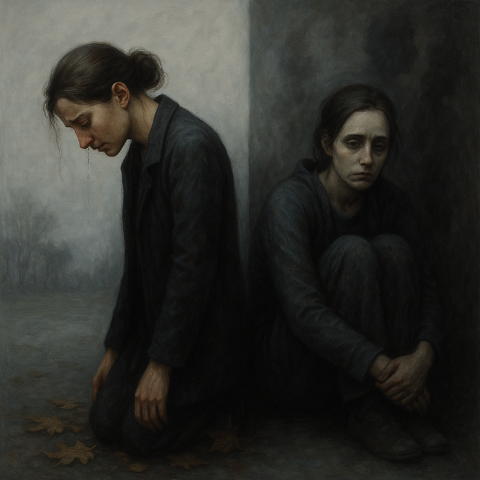
What is depression?
Depression is a mental illness that goes beyond normal grief. Symptoms of depression usually last a minimum of two weeks and include:
- Persistent sadness or emptiness
- Loss of interest – things that used to give pleasure are no longer enjoyable
- Sleep disorders – insomnia or excessive sleeping
- Changes in appetite – lack of appetite or overeating
- Fatigue and lack of energy
- Feelings of worthlessness or excessive guilt
- Difficulties with concentration
- Thoughts of death or suicide
Depression can have various causes – biological (e.g., neurochemical disorders), psychological (chronic stress) or situational (stressful life events). Unlike bereavement, symptoms of depression do not always resolve over time and may require professional treatment.
Differences between bereavement and depression
| Feature | Mourning | Depression |
|---|---|---|
| Main feelings | Sadness, nostalgic longing | Emptiness, overwhelming sadness |
| Duration | Usually up to 6-12 months | Minimum 2 weeks, often longer |
| Interest in life | Remains between episodes of intense sadness | Persists most of the time |
| Suicidal thoughts | Less frequently, usually associated with longing | It can be constant and escalating |
| Reactions to support | Support usually helps right away | Sometimes insufficient, need for treatment |
When can bereavement turn into depression?
Not every bereavement becomes depression, but it is worth watching yourself or loved ones when:
- The sadness does not fade after a few months.
- The lack of energy and motivation remains at a consistently high level.
- Difficulties with daily functioning – the problem of going to work, school or taking care of the family.
- Intense feelings of guilt or thoughts of… “it would have been better if I had left too.”
- Social isolation – avoiding friends, family, abandoning hobbies.
If any of these symptoms occur for an extended period of time and affect your life – it is worth reaching out for help.
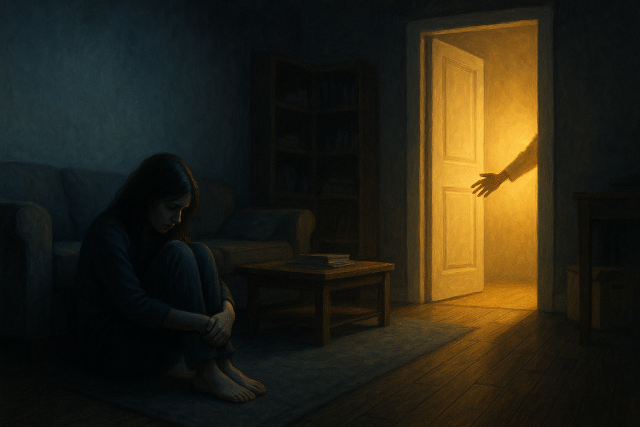
How and where to seek help?
- The first step – a conversation:
- Trust a friend or family member. Sometimes just saying the problem out loud brings relief.
- Talk to your primary care physician – he or she may refer you to a psychologist or psychiatrist.
- Psychologist / psychotherapist:
- It helps to understand the causes of emotions and learn to cope with loss.
- Work on thought patterns, relaxation techniques, cognitive-behavioral therapy.
- Psychiatrist:
- If symptoms are severe, a psychiatrist may suggest pharmacotherapy (antidepressants).
- It monitors the effects of drugs and adjusts dosages.
- Support groups:
- Meetings of people experiencing bereavement or depression.
- You share experiences, the feeling that you are not alone is reassuring.
- Helpline:
- In Poland, for example, the Helpline for Adults in Emotional Crisis – 116 123.
- Free of charge, anonymously, daily from 14:00 to 22:00.

Some simple daily tips
- Routine: Plan to take a short walk, eat at regular times, and get regular sleep.
- Exercise: Physical exercise, even 20 minutes a day, improves mood.
- Contact: Try to see friends, family, if only by phone.
- Small goals: Set yourself small tasks – eat vegetables, drink water, read a page of a book.
- Limit stimulants: Alcohol and stimulants can temporarily make you feel better, but they make depression worse.
Grief is a natural process of coping with loss, and depression is a disease that requires treatment. If sadness and lack of energy last a long time, make daily life difficult, or thoughts of death arise – it is not worth delaying. Talking to loved ones, visiting a doctor, psychologist or psychiatrist is a sign of strength, not weakness. Support is at hand – it is worth taking advantage of it.
Remember: you are not alone, and coming forward for help is the first step toward regaining the joy of life.