
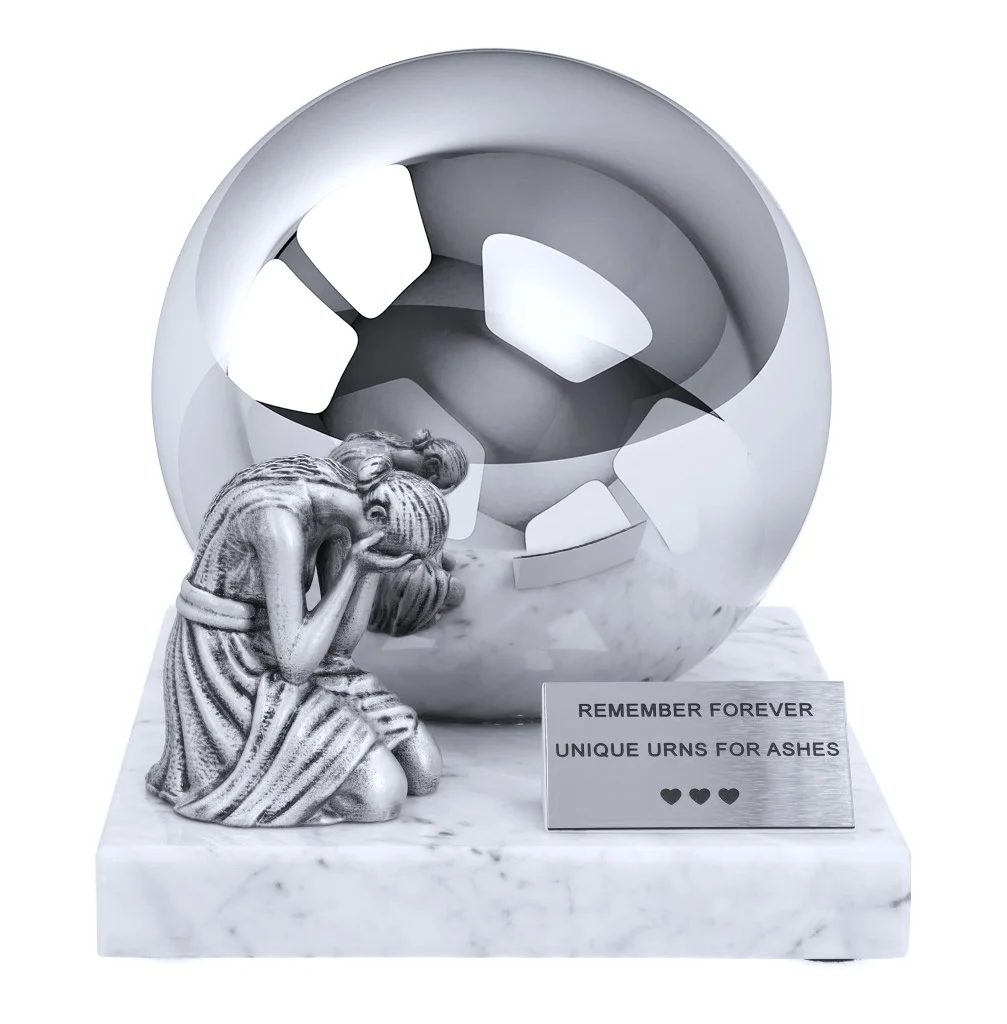
Cremation urns are made from a range of materials, each with its own character. Wood offers natural warmth and easy personalisation; ceramic gives artistic colour and individuality; metal and brass provide strength and a polished, enduring finish; glass creates a unique, light-catching keepsake; and stone and marble deliver weight, permanence and a classic appearance. The right choice depends on where the urn will rest, whether it will be kept, buried or scattered, and the look that feels most fitting.
Choosing an urn is one of the more personal decisions a family makes, and the material is at the heart of it. Each material carries a different feeling – the quiet warmth of wood, the artistry of ceramic, the solidity of stone – and each behaves differently in practical terms, from how it suits a home display to whether it is appropriate for burial or scattering. This guide compares the main urn materials side by side, so you can find the one that best honours your loved one and fits your intentions.
Urn materials at a glance
Before looking at each material in detail, the table below summarises how they compare on the points families ask about most.
| Material | Character | Best suited to | Personalisation |
|---|---|---|---|
| Wood | Warm, natural, understated | Home display, interment | Engraving, inlays |
| Ceramic | Artistic, colourful, individual | Home display | Hand-painted finishes |
| Metal / brass | Strong, polished, enduring | Home display, interment | Engraving, etching |
| Glass | Unique, light-catching, artistic | Home display, keepsakes | Colour, fused ashes |
| Stone / marble | Weighty, permanent, classic | Home display, interment | Engraving |
Wooden urns
Wood is among the most popular choices, and for good reason. It brings a natural warmth that suits a home setting, and every piece carries its own grain, so no two are quite alike. Hardwoods such as oak, walnut and mango wood are common, each with a distinct tone and figure.
Why families choose wood
- A warm, organic appearance that feels at home on a shelf or mantelpiece
- Excellent for personalisation – wood takes engraving and inlay beautifully
- A natural material, well suited to woodland or garden interment
- Lighter than stone or metal, making it easy to handle and move
Wood is a fitting choice for those who want something understated and tactile. Because it is biodegradable in its untreated forms, it also suits families considering burial. You can explore the full range in our wooden urns collection, and our guide on how to choose a cremation urn covers the wider decision.
Good to know: A sealed or finished wooden urn is intended for keeping and display, while an untreated or biodegradable wooden urn is better suited to natural burial.
Ceramic urns
Ceramic urns are prized for their artistry. Hand-thrown and hand-finished pieces can carry rich glazes, painted detail and sculptural form, making each one genuinely individual. For a family who wants the urn itself to be a work of art, ceramic offers possibilities few other materials can.
Strengths and considerations
- Distinctive colour and finish, often hand-painted and one of a kind
- A smooth, refined surface that displays beautifully in the home
- Holds its appearance over time without tarnishing or fading
The main practical point is care: ceramic is more fragile than wood or metal, so a stable, secure display position is wise, and it is generally chosen for keeping rather than burial. Browse the ceramic urns range to see the variety of forms and glazes available.
Metal and brass urns
Metal urns, particularly brass, are valued for strength and a sense of permanence. A polished metal urn has a timeless, dignified presence, and the surface can be finished in many ways – from bright polish to brushed or antique tones.
Why metal endures
- Highly durable and resistant to damage, ideal for long-term keeping
- Suitable for both home display and interment
- Takes fine engraving and etching for personalisation
- A secure, well-sealed closure that protects the contents
Brass in particular offers a warm, classic lustre that ages gracefully. Because metal is robust, it is also a sound choice where the urn may be handled or transported. See the brass and metal urns collection, and if you are weighing capacity, what size urn you need explains how to match volume to your loved one.
Key takeaway: For sheer durability and a polished, enduring finish, metal and brass are hard to better – well suited to keeping, handling and interment alike.
Glass urns
Glass urns are among the most striking. Hand-blown pieces catch and hold the light, and colour can be worked through the material to create something truly unique. For families who want a keepsake that doubles as a beautiful object, glass is a moving choice.
What makes glass special
- A one-of-a-kind, light-catching appearance, never exactly repeated
- Available in rich colours and flowing, organic forms
- Can incorporate a small portion of ashes fused within the glass itself
As with ceramic, glass calls for a settled, safe display position. It is most often chosen for the home, and smaller glass keepsakes are a popular way to share a portion of ashes among relatives. Discover the glass urns range to see the artistry involved.
Stone and marble urns
Stone and marble urns convey permanence like no other material. Their weight and natural veining give a classic, monumental quality, and they sit with quiet authority whether in the home or interred in a memorial garden.
The case for stone
- A weighty, solid presence that feels enduring and dignified
- Natural marble veining makes each piece individual
- Highly durable and well suited to interment as well as display
- A timeless, traditional appearance that does not date
The trade-off is weight: stone urns are the heaviest option, so a stable surface is important if displayed at home. For families who value permanence above all, the stone and marble urns collection offers a fitting choice.
How to choose between materials
The decision rarely comes down to one factor alone. A few questions help narrow it:
- Where will the urn rest – on display at home, or interred?
- Do you want something warm and natural, or polished and permanent?
- Will it need to be handled or moved, favouring a robust material?
- Is personalisation important, and in what form – engraving, colour or inlay?
If the urn will be buried, a biodegradable wood or a durable metal or stone tends to suit. If it will be displayed and kept, the choice opens up to every material, and feeling becomes the deciding factor. Whatever draws you, the full picture of sizing, sealing and care is set out in how to choose a cremation urn, and where to keep an urn at home offers ideas for displaying it with dignity.
Key takeaway: There is no superior material, only the one that feels right. Match the material to where the urn will rest and to the character you wish to honour, and the choice will follow naturally.
Frequently asked questions
Which urn material is the most durable?
Metal, brass and stone are the most durable and resistant to damage, making them well suited to long-term keeping, handling and interment. Wood is robust too, while ceramic and glass require more careful handling.
What material is best for burying ashes?
For interment, biodegradable wood suits a natural burial, while metal and stone are chosen where a permanent, solid urn is preferred. Operators may have their own requirements, so it is worth confirming with the cemetery or burial ground.
Can urns be personalised whatever the material?
Most materials can be personalised. Wood, metal and stone take engraving well, ceramic and glass can carry colour and hand-finished detail, and glass can even incorporate a small portion of ashes.
Which material is best for displaying at home?
All of them display beautifully. Wood offers warmth, ceramic and glass bring artistry, metal gives a polished finish, and stone conveys permanence. The best choice is the one whose character feels most fitting.